


Here’s a number that stopped me cold when I read it: 53% of Americans worry about money every single day.
That’s up from 44% just five years ago. More than half of us wake up and go to sleep with money anxiety sitting on our chest. And yet — here’s the twist — the same research shows that more Americans than ever are now following a monthly budget. We’re trying harder. We’re just not getting the results we hoped for.
I’ve been there. I had a budget on a spreadsheet for three years. I tweaked it constantly. I still overspent every month and wondered why.
The truth is: most budgeting advice treats money like a math problem. Cut here, save there, and the numbers work out. But the math isn’t the issue. The system is.
This is the guide I wish I’d had. No guilt. No impossible rules. Just honest, practical strategies that actually work in 2026 — with real data behind every suggestion.
The State of American Money Right Now

Before we get into the how, let’s get real about the where we are.
According to a major Ramsey Solutions survey from early 2026, the number of Americans following a monthly budget has grown from 47% in 2021 to 53% today — the biggest gains coming from Gen Z and middle-income households. That’s genuinely encouraging.
But here’s the painful flip side: the personal savings rate hit just 2.6% in April 2026, according to CNBC data. We’re budgeting more — and saving less. Why? Because inflation continues to outpace wage growth for millions of households, leaving less to work with after the essentials are paid.
Some other numbers that paint the picture:
- 37% of Americans still can’t cover a $400 emergency without borrowing or selling something
- 69% of Americans were living paycheck to paycheck in 2025 — even those with budgets
- 83% of Americans now consider themselves “frugal,” cutting back on clothing, dining out, entertainment, and groceries
- The most popular ways people are saving: buying store-brand products (95%), using coupons and promo codes (88%), cash-back apps (83%), and canceling unused subscriptions (71%)
This isn’t a discipline problem. This is an economic pressure problem. And a systems problem. Let’s fix the systems.
Step 1: Build a Budget That Fits Your Real Life (Not an Ideal Life)

The #1 reason budgets fail? They’re too aspirational.
The most effective budgets start with how you actually spend money — not how you wish you did. Here’s how to do it in three steps:
Track first, cut second. Before you restrict a single dollar, spend one full month tracking every purchase. Your bank app or a free tool like YNAB (You Need a Budget) or Mint can pull this data automatically. Most people are shocked by two things: recurring subscriptions they forgot about, and how much they spend on small, frequent purchases.
Pick a framework — and stick with one. There are three that work for most Americans:
| Method | How It Works | Best For |
|---|---|---|
| 50/30/20 Rule | 50% needs, 30% wants, 20% savings/debt | Most beginners |
| Zero-Based Budget | Every dollar assigned a job until $0 left | Detail-oriented planners |
| Envelope System | Cash in physical envelopes per category | People who overspend on cards |
The 50/30/20 rule is the most widely recommended starting point — half your take-home pay to essentials like rent, utilities, and groceries; 30% to lifestyle spending; and 20% toward savings and debt paydown.
Financial expert Alexa von Tobel puts it this way: the best budgets aren’t the most restrictive — they’re the ones that “match the way you live.” A budget that ignores your morning coffee or your gym habit is a budget you’ll abandon by February.
Protect your non-negotiables. If fresh flowers on your kitchen table or a monthly massage brings you genuine joy, that’s not a budget leak — it’s a priority. Identify what genuinely matters to you and protect it. Cut the rest mercilessly.
Step 2: Make Saving Automatic (Remove Willpower from the Equation)

Here’s the most powerful insight in personal finance, and it’s embarrassingly simple: don’t save what’s left. Spend what’s left after saving.
Every behavioral finance study says the same thing. Automating your savings removes the need for daily willpower — and willpower is a finite resource that runs out by Thursday.
Here’s how to set it up:
Open a high-yield savings account today. Traditional bank savings accounts are paying around 0.62% APY as of 2026. High-yield savings accounts (HYSAs) at online banks are offering 4.5% to 5.0% APY. On $5,000 in savings, that’s the difference between $31 and $250 per year in interest — just by moving where your money sits.
Top-rated HYSAs right now include Marcus by Goldman Sachs, Ally Bank, and SoFi. All are FDIC-insured and fee-free.
Set up automatic transfers on payday. Log into your bank and schedule a recurring transfer to your HYSA on the same day your paycheck hits. Even $50 per transfer adds up to $1,200 a year. You won’t miss money you never see in your checking account.
Name your savings goals. Research consistently shows that people save more — and stay motivated longer — when savings have a specific label. Don’t just have a savings account. Have a “Paris Trip Fund,” an “Emergency Buffer,” and a “New Car Down Payment” account. Most HYSAs let you create multiple labeled buckets at no extra cost.
Step 3: Build Your Emergency Fund (Before Anything Else)
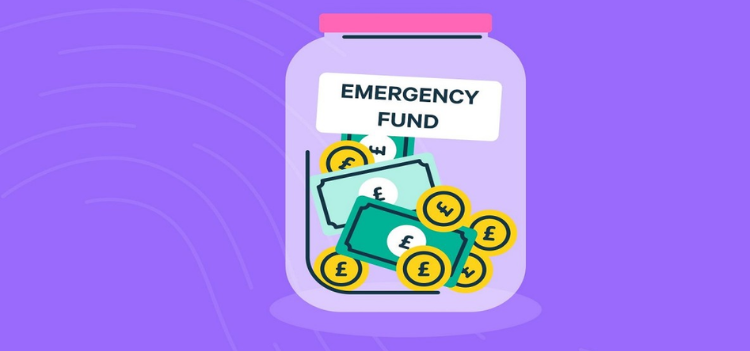
If there’s one financial move that changes everything, it’s this one.
Having 3 to 6 months of expenses in a liquid, accessible savings account protects you from the most common financial disasters: job loss, medical bills, car repairs, and appliance breakdowns. Without it, every emergency goes on a credit card — and then you’re paying 20%+ interest on top of an already stressful situation.
About 51% of US adults experienced an unexpected financial emergency in the last five years. That’s not bad luck — that’s just life. The only question is whether you’ll face it with a buffer or without one.
How to build yours quickly:
Start with a mini goal of $1,000. That covers most car repairs, minor medical bills, and urgent household expenses. Then work up to one month of expenses, then three.
If saving $1,000 feels impossible right now, here are four ways to find the money:
- Cancel unused subscriptions — the average American pays for 4 to 6 subscriptions they no longer use regularly
- Switch to store-brand groceries — 95% of frugal Americans already do this; studies show most people can’t tell the difference in blind taste tests
- Use cash-back apps — Rakuten, Ibotta, and Fetch Rewards can realistically save $50 to $150 per month on things you’re already buying
- Automate $25 per week — small and invisible, but that’s $1,300 in a year
Step 4: Cut the Five Biggest Budget Killers
According to 2026 data, here are the spending categories where Americans are cutting back most aggressively — and where the biggest savings opportunities hide:
🍽️ #1 — Dining Out & Takeout (58% of Americans cutting back)
The average American household spends over $3,000 per year eating out. Even cooking at home three extra nights per week can save $150 to $200 per month — that’s $1,800 to $2,400 per year going into your savings account instead of a restaurant’s register.
Quick win: Try the “cook once, eat twice” method — make double portions at dinner and use the leftovers for lunch the next day.
👗 #2 — Clothing (63% cutting back)
Americans spend an average of $1,800 per year on clothing. Before any clothing purchase, implement a 72-hour rule: wait three days before buying. Most impulse purchases disappear on their own.
Also: thrifting, clothing swaps, and end-of-season sales are genuinely underused by people who haven’t tried them.
📱 #3 — Subscriptions & Entertainment (60% cutting back)
Do a subscription audit right now. Log into your credit card statement and look for recurring charges. Americans consistently underestimate how many subscriptions they’re paying for. Common culprits: streaming services you don’t use, gym memberships, news sites, app subscriptions, and forgotten free trials that converted to paid.
Target: Cancel or pause everything you haven’t used in the past 30 days.
☕ #4 — Everyday Conveniences
Coffee, rideshares, convenient food stops — these are the “latte factor” categories. Not because coffee will make or break your finances, but because they’re invisible spending: automatic, low-attention purchases that compound quietly.
Track them for one month. You might be surprised.
🛒 #5 — Groceries
Grocery prices remain elevated. The most effective strategies: meal planning before shopping (reduces impulse buys by 30-40%), buying store brands, shopping at discount grocers like Aldi, and using weekly store apps for digital coupons.
Step 5: Use the Right Tools for 2026
The personal finance app landscape has improved dramatically. The best free tools right now:
For budgeting:
- YNAB (You Need a Budget) — the gold standard for zero-based budgeting. Free for 34 days, then $14.99/month (usually pays for itself many times over)
- Mint — free, automatic transaction categorization, solid overview
- Personal Capital (Empower) — best for tracking net worth alongside budgeting
For saving:
- Digit — automatically analyzes your spending and moves small amounts to savings when you won’t miss them
- Acorns — rounds up purchases to the nearest dollar and invests the difference
For grocery savings:
- Ibotta — cash back on grocery purchases
- Fetch Rewards — scan receipts for points redeemable as gift cards
- Flipp — aggregates store circulars to find weekly deals
A note on AI tools: By 2026, conversational AI, embedded finance apps, and biometric-secured banking are becoming standard. Fidelity now offers AI-powered nudges that flag fee leaks, idle cash, and subscriptions you’ve stopped using. Your bank app may already have features you haven’t explored.
Step 6: The 90-Day Financial Reset (Instead of Annual Resolutions)
Here’s something the personal finance world doesn’t talk about enough: annual resolutions fail because a year is too long a horizon to maintain momentum.
Instead, try the 90-day financial checkpoint approach. Set a specific, achievable goal for the next 90 days — not a year-long budget overhaul, just one thing:
- Save $500 in a HYSA by October 1
- Cancel three subscriptions this month
- Cook at home five nights a week for 12 weeks
- Pay an extra $100 on credit card debt each month
At the end of 90 days, assess and reset. This approach mirrors natural calendar rhythms, accommodates life’s inevitable surprises, and gives you regular wins that build momentum.
Write your one goal down and put it somewhere you’ll see it every day. The act of writing it increases follow-through significantly — not as a budgeting myth, but as consistent behavioral research.
The Mindset Shift That Changes Everything

Here’s the thing nobody tells you about budgeting: it’s not about restriction. It’s about freedom.
A budget isn’t a cage. It’s a map. It tells you exactly where your money is going — and gives you the power to redirect it toward what actually matters to you.
When 34% of Americans expect their financial situation to improve in 2026, and 74% believe they’ll be better off five years from now, that optimism isn’t wishful thinking. It’s the result of people who decided to take control of their money instead of letting their money control them.
You don’t need to be perfect. You need to be consistent.
Start with one thing from this guide today. Just one. Automate $25 to a savings account. Cancel one subscription. Track your spending for the next seven days. Build from there.
The Americans who will look back on 2026 as a financial turning point won’t be the ones who tried to change everything at once. They’ll be the ones who changed one thing — and kept going.
Your 2026 Budgeting Quick-Start Checklist
Print this out or save it to your phone:
- Track all spending for 30 days using an app or spreadsheet
- Choose a budget method (50/30/20 is the best starting point)
- Open a high-yield savings account (target: 4.5%+ APY)
- Set up an automatic transfer on payday — any amount
- Build a $1,000 emergency fund as first savings goal
- Do a subscription audit — cancel anything unused in 30+ days
- Name your savings goals (specific names = higher motivation)
- Set one 90-day financial goal and write it down today