

A few months ago, I noticed something during my morning walk in the neighborhood. Three women passed me on the same trail — all wearing what looked like tactical gear strapped to their torsos. Weighted vests. One was power-walking, one was walking her dog, and one was doing lunges near a park bench.
By the time I got home, I’d already Googled “weighted vest for women” and fallen down a rabbit hole that lasted two hours.
Turns out, I wasn’t alone. Searches for “weighted vest” on Amazon increased 285% in a single year, and six out of the top ten search terms included the word “woman.” Orangetheory, Equinox, and Peloton have all incorporated weighted vests into their programming. Fitness influencers, doctors, and personal trainers are all talking about them.
So what is going on? Is this just another piece of fitness equipment that’ll collect dust next to the foam roller? Or is there actually something real here?
I went deep on the research, talked to what the experts are saying, and yes — I bought one and tested it myself. Here’s everything you need to know.
What Is a Weighted Vest, Exactly?
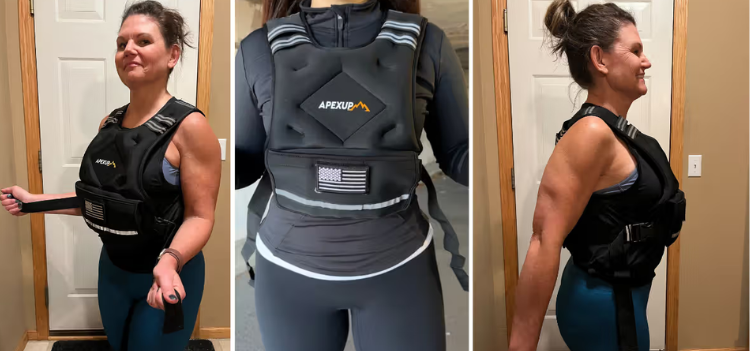
A weighted vest is exactly what it sounds like: a wearable vest filled with added weight — usually steel plates, sand, or iron shot — that you wear during exercise or everyday movement.
They come in a wide range:
- Light versions (5–10 lbs) designed for walking and daily wear
- Mid-range (10–20 lbs) for general fitness, hiking, and bodyweight workouts
- Heavy-duty (20–50+ lbs) for strength training and rucking
The core idea is simple: by adding load to your body, you make every movement — walking, squatting, going up stairs, doing push-ups — harder. Your muscles work more, your heart works more, and your bones feel more mechanical stress. All of that, the theory goes, adds up to a more effective workout without adding time or complexity to your routine.
Why Women Specifically Are Driving This Trend
Here’s the thing that makes the weighted vest conversation especially compelling for women: it’s not just about looking fit. It’s about long-term health in a way that’s genuinely urgent.
Only 19% of women strength train twice a week — the minimum recommended to fight the muscle and bone loss that accelerates during and after menopause. That’s a staggering gap between what women need and what most are actually doing.
And the consequences are real. Women are significantly more likely than men to develop osteoporosis because estrogen — which plays a crucial role in protecting bones — decreases sharply at menopause. Bone loss, muscle loss, balance issues, and what researchers call the “frailty epidemic” are legitimate health concerns that become more pressing with every decade of life.
That’s where the weighted vest steps in — not as a magic solution, but as a practical, accessible tool that makes the movement you’re already doing more effective.
As celebrity trainer Jay Cardiello explains: the growing interest among women “stems from research highlighting the benefits of resistance training for bone density, cardiovascular health, and metabolic function.” He notes that “studies have shown that mechanical loading through resistance — like that from a vest — can help slow or even reverse bone loss and improve muscular strength and balance.”
The Real Benefits — What Science Actually Supports
Let’s be honest: social media has a way of overpromising on fitness trends. So let’s separate the hype from the evidence.
✅ Increased Calorie Burn
This one is well-supported. Walking with a weighted vest increases the intensity of your workout, raises your heart rate, and burns more calories compared to walking without one. Joyce Schulman, a certified personal trainer focusing on women, wellness, and longevity, puts it simply: “Rucking — walking with a weighted load — increases calorie burn by adding resistance to your walks.”
If your morning walk feels easy but running doesn’t appeal to you, adding a vest at about 10–15% of your body weight can meaningfully increase the challenge without adding impact on your joints.
✅ Cardiovascular Benefits
There are genuine cardiovascular benefits to adding weight to your workout. Roger Fielding, an expert in exercise physiology at the USDA Human Nutrition Research Center on Aging at Tufts University, confirms there are cardiovascular gains — particularly if the weighted vest is what makes the difference between someone exercising or not exercising at all. More workout intensity = better heart health outcomes over time.
✅ Muscle Engagement
More load on your body means your muscles have to work harder during every movement. Squats, lunges, push-ups, step-ups, and even walking all become more challenging when you’re wearing 10–20 extra pounds. Over time, that translates to improved muscular strength and endurance.
✅ Posture Improvement
This is an underrated benefit that doesn’t get enough attention. Wearing a vest forces you to engage your core and stand up straight — slouching under extra weight becomes uncomfortable quickly. Fitness icon Denise Austin has noted that weighted vests can help with posture problems by “opening up the chest and forcing you to think about how you’re standing.”
⚠️ Bone Health — The More Complicated Story
Here’s where it gets nuanced — and where the honest answer matters.
The bone density benefit is the most talked-about claim, and the research is real but limited. Small studies have shown that weighted vest use, particularly among postmenopausal women, can help maintain trunk bone density and may slow bone loss when combined with exercise. One randomized controlled trial on Osteoboost (a vibrating weighted vest device) showed significant reduction in bone density loss in the spine for postmenopausal women with osteopenia.
However, a larger 12-month trial called INVEST in Bone Health — which followed 150 older adults — found that daily weighted vest use alone did not prevent weight loss-associated bone loss at the hip. Researchers are still working to understand the nuances of which exercises, which populations, and what weight levels produce the most benefit.
The honest conclusion: weighted vests can support bone health as part of a broader resistance training routine. They are not a substitute for proper strength training, and they are not a replacement for medical advice if you have osteoporosis or low bone density. Talk to your doctor before adding one to your routine if bone health is your primary concern.
How to Actually Use One: A Beginner’s Guide
If you’ve decided to try a weighted vest, here’s how to get started safely and effectively.
Start Light
The general recommendation for beginners — and for older adults especially — is to start with a vest that’s 5–10% of your body weight. For a 150-pound woman, that’s roughly 7–15 pounds. Don’t be tempted to start heavy. Your joints, spine, and muscles need time to adapt.
Try These Workouts First
Weighted walking (rucking): The single most accessible entry point. Put on your vest and take your normal walk. Start with 20–30 minutes and work up from there. Strava’s 2025 Trend Report listed walking as the second most-recorded activity type, and the rucking community is exploding.
Bodyweight circuits: Weighted squats, lunges, step-ups, push-ups, and planks all become more challenging with a vest. A simple 20-minute bodyweight circuit with a vest can rival a traditional gym session.
Stair climbing: One of the most underrated weighted vest workouts. Find a staircase — at home, a stadium, or a parking garage — and climb. The combination of incline and added weight is incredibly effective.
Everyday wear: Some women wear lightweight vests (5–8 lbs) while doing household tasks, grocery shopping, or running errands. The cumulative effect of adding load to daily movement adds up.
Progress Slowly
A good rule: add weight only when your current load feels comfortable for at least two full weeks. Most adjustable vests let you add weight in small increments — use that feature rather than jumping to the maximum weight.
Who Should Be Careful (Or Avoid Them)
Weighted vests are generally safe for most people — but there are important exceptions:
- Balance issues: If you’re prone to falls or have balance challenges, extra weight can increase fall risk. Consult your doctor first.
- Neck, shoulder, or back injuries: A vest places additional stress on the spine and can worsen conditions like degenerative disc disease.
- Pregnancy: Particularly in the second and third trimester, avoid adding extra load to the trunk.
- High blood pressure or heart conditions: The increased cardiovascular demand warrants medical clearance.
- Osteoporosis (advanced): This seems counterintuitive given the bone health discussion above, but advanced osteoporosis requires individualized medical guidance before adding any new resistance.
When in doubt, a quick conversation with your doctor or physical therapist is always worth it.
What to Look for When Buying One
The weighted vest market has exploded — and not all vests are created equal. Here’s what matters when shopping:
Fit for a woman’s body. This sounds obvious, but it’s been a real problem. Most traditional weighted vests were designed for men’s bodies — flat chests, broader shoulders, different weight distribution. Several brands have launched women-specific designs in 2026 that account for bust, waist, and hip shape. Look for vests with adjustable straps at the chest and waist.
Adjustable weight. Opt for a vest where you can add or remove weight plates. Starting at 5 lbs and working up to 20 is far more sustainable than buying a fixed-weight 20-pound vest and wondering why your back aches.
Weight distribution. The best vests distribute weight evenly across the front and back torso — not just stacked on your shoulders. Uneven distribution leads to poor posture and strain.
Comfort and breathability. You’ll be sweating in this thing. Look for breathable fabric, a snug but not restrictive fit, and minimal bounce during movement.
Weight capacity. If you plan to progress over time, buy a vest with capacity beyond your starting weight.
My Personal Experience: What 6 Weeks with a Weighted Vest Taught Me
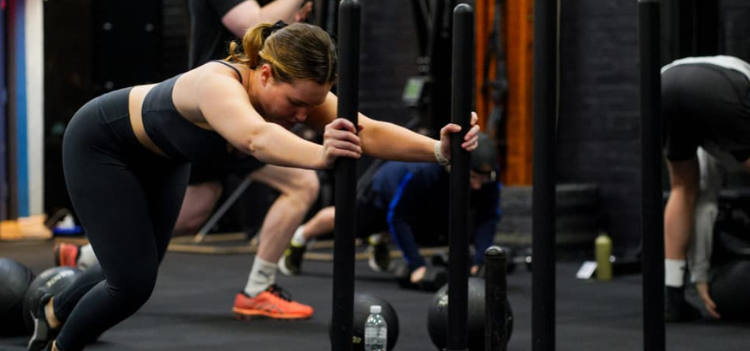
I started with an 8-pound vest on my daily 30-minute walks. Week one felt noticeably harder — my heart rate was elevated, and I was genuinely tired by the end. By week three, it started feeling normal, and I added two more pounds.
What surprised me most wasn’t the calorie burn (though my fitness tracker did confirm higher numbers). It was the posture effect. I caught myself standing taller, pulling my shoulders back without thinking about it. After six weeks, I noticed the same habit carrying into my walks without the vest.
I also incorporated it into bodyweight workouts — squats, lunges, and push-up variations — and the difference in how those movements felt was significant. My legs were sore in a way they hadn’t been from bodyweight alone in years.
Would I recommend it? Genuinely, yes — with the caveat that it’s a tool, not a shortcut. Combined with regular strength training and good nutrition, it’s a meaningful addition to a fitness routine. Used instead of actual strength training with the expectation that it’ll fix bone density, it may disappoint.
The Bottom Line
Weighted vests for women are trending for a reason that goes deeper than social media aesthetics. They address a real and urgent gap: most American women aren’t getting enough resistance training, and the long-term consequences — weaker bones, reduced muscle mass, balance decline — are serious.
A weighted vest won’t single-handedly solve that gap. But it will make your walks harder, your bodyweight workouts more effective, and — with time and consistency — contribute to a stronger, more resilient body at every age.
Start light. Progress slowly. And enjoy the looks you’ll get on the trail from the women who are about to Google “weighted vest” as soon as they get home.
Quick Reference: Weighted Vest Starter Guide
| Goal | Starting Weight | Best Activity |
|---|---|---|
| General fitness | 5–8% body weight | Walking, bodyweight circuits |
| Bone health support | 5–10% body weight | Walking, jumping, step-ups |
| Cardiovascular boost | 10–15% body weight | Rucking, stair climbing |
| Strength building | 10–20% body weight | Squats, lunges, push-ups |
Enjoyed this post? Pin it for later and share with a friend who keeps asking about weighted vests! Drop your questions in the comments — I’m happy to help you figure out the right starting weight and workout plan.
Tags: weighted vest for women, fitness trends 2026, rucking, bone health, women’s fitness, workout at home, strength training women, wellness 2026, lifestyle fitness