
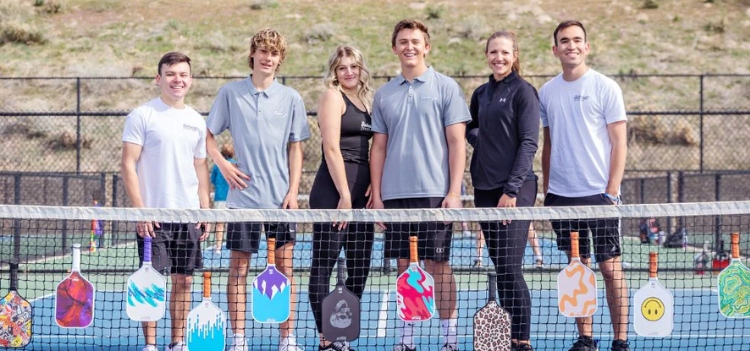

Once dismissed as a retirement-community pastime, pickleball has become the fastest-growing sport in the United States for the fifth consecutive year, pulling in Gen Z, millennials and multigenerational families along the way. Here is what the latest numbers, research and industry voices say about how it happened and where it goes next. Pickleball took off because it is cheap, easy to learn and built for mixed-ability groups, which makes it one of the few sports that genuinely works across generations.

Pickleball delivers a meaningful cardio workout while being gentler on the body than tennis, which has made it especially attractive to older players and people managing heart issues. Doubles pickleball players had 14% higher heart rates and burned 36% more calories than walking at a self-selected pace for 30 minutes, according to a study published via ScienceDirect. Research published via Springer suggests it may also be safer than tennis for people with cardiac concerns.The movement patterns matter too. Heather Milton, a clinical exercise physiologist at the Sports Performance Center at NYU Langone Health, told The New York Times that pickleball builds skills walking and cycling do not. “Because the paddle’s so small, pickleball is great for hand-eye coordination as well as neuromuscular coordination. You’re moving in different planes, not just forward like you do when you’re walking or cycling, which is good for your agility. And because there’s rotation involved, you’re working your core along with your upper and lower extremities,” she said.
Pickleball is not yet on the Olympic program, but industry leaders see a credible path to inclusion as soon as the 2032 Brisbane Games. The World Cup of Pickleball grew from 32 participating countries to 78 in just one year, a jump that has reshaped how investors and federations talk about the sport’s trajectory. “When I went to Lima, Peru, it really opened my eyes. You could see the Olympic pathway forming. If I were a betting man, I’d say 2032, we’re going to see pickleball in the Brisbane Games,” Barragan told ForbesHe also expects a wave of consolidation as outside money moves in. “There’s real capital coming into the sport now. Private equity has been sitting on the sidelines, waiting to see who emerges. I think 2026 is going to be a very interesting year for M&A in pickleball.
The pro game’s biggest stars are Ben Johns on the men’s side and Anna Leigh Waters on the women’s side, with the PPA Tour and Major League Pickleball serving as the sport’s two main professional platforms. The PPA Tour is the official pro tour, while Major League Pickleball runs a team-based draft format that has helped pull in celebrity investors and crossover athletes, including Drew Brees and several tennis stars. Major events are drawing hundreds of thousands of TV viewers and pushing into prime-time coverage windows. Endorsement deals are accelerating that mainstream shift. Nike’s signing of Anna Leigh Waters was a turning point for how the sport is perceived by sponsors and fans alike.
Pickleball is considered a fairly new sport, but in actuality, it originated back in 1965 with three bored dads looking for a fun, summer activity for their families.
The Numbers

Pickleball has been around for almost 60 years, but its popularity has grown in the last five years.
The shift came with the COVID-19 pandemic in 2020 and restrictions that pushed people to find new outdoor activities. According to the Sports and Fitness Industry Association (SFIA), participation grew by 21% in 2020, with 4.2 million Americans playing the sport at least once. Three years later, the number of participants had tripled to 13.6 million players.
The main factors in its growth are accessibility and simplicity. In comparison with tennis, which requires more time investment and even lessons to learn, pickleball can be learned in a few hours.
Another bonus in comparison with tennis is the lower cost. Pickleball equipment is usually cheaper than tennis gear, with quality paddles priced for under $100 and balls costing a few dollars.
Court Expansion & Infrastructure
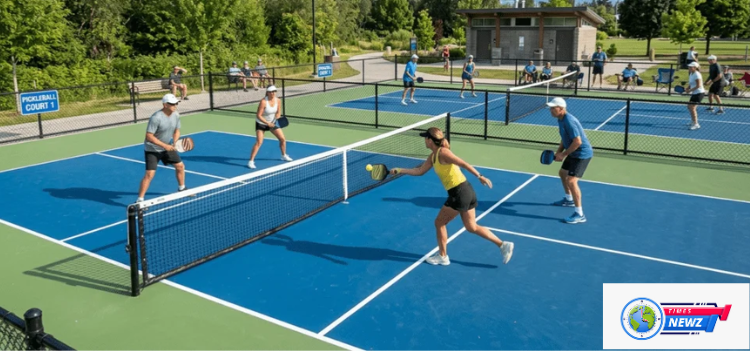
With growing participation numbers, cities and recreation centers had to quickly respond to rising demand and start construction of courts and convert underused or older tennis courts.
The 2024 USA Pickleball Annual Growth Report shows that more than 18,000 new courts were added in only one year, which brought the nationwide total to 68,458 (a 35.7% increase in one year alone).
Tournaments & Professionalization

With a rapid rise in players, the next natural progression is the competitive scene. And the numbers don’t disappoint.
In 2024 alone, USA Pickleball held 142 tournaments (this includes the Biofreeze USA Pickleball
Championships). That event drew more than 2,600 players from 47 states and 13 counties, 10,000 spectators, and added a staggering $3.6 million (USD) to the local economy — event and tourism.
Also, the professional side of the sport expanded. Last year, organizations like Professional Pickleball Registry (PPR) and Pickleball Coaching International (PCI) trained thousands of new instructors.
Sports growth drew media attention, with major media and sports outlets like Forbes, Sports Illustrated, and The Wall Street Journal covering pickleball extensively.
A Sport Blind to Age and Ability

Part of pickleball’s appeal is in its age inclusivity.
Baby boomers and retirees are playing it as a low-impact sport, and young athletes see it as a fast-paced, social alternative to tennis. Also, it became a popular family activity that can be played with parents, grandparents, and children.
But pickleball isn’t only age-inclusive; the 2024 Biofreeze USA Pickleball National
Championships introduced a wheelchair division to provide even bigger accessibility. Also, USA Pickleball has supported numerous youth-focused projects and veteran initiatives to make sure the sport continues to grow, and also supports and includes the whole community.
Gear Innovations
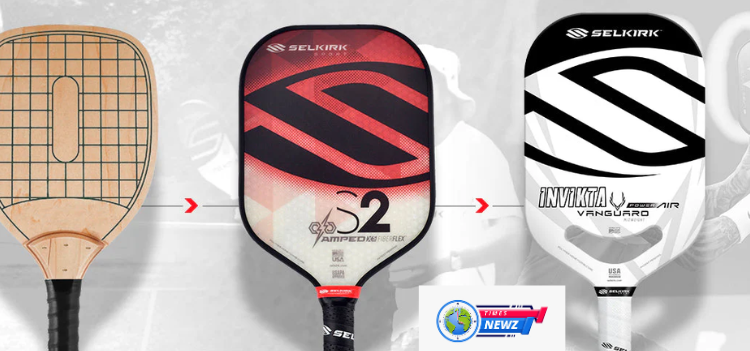
Since the sport grew rapidly, so has the technology around the pickleball equipment. Manufacturers started innovating with materials and designs to improve overall performance and comfort while playing. Last year alone, there were 1,713 new submissions tested and 1,225 new paddles approved.
Todd Skezas, the CEO of Pickleball Nation, accurately noted: “CRBN has redefined what foam-core technology can achieve in pickleball paddles, delivering a groundbreaking combination of consistency, touch, power, and durability that sets this line apart from anything else on the market.”, portraying just how seriously pickleball has been taken with so many branded companies investing big into technology to make the sport even better and more competitive.
Tensions with Tennis
With its rapid growth, tennis players and clubs have expressed concern over court conversions, and that increased pickleball adoption will lead to reduced opportunities for tennis players.
Even the tennis pros are expressing concern. After a Wimbledon match last year, Novak Djokovic said that there’s potential that pickleball and padel could ‘endanger’ tennis in the future.
The reason behind that is financial gain to the clubs that are converting one tennis court into three padel and pickleball courts.
The Growing Pickleball Community

The growing pickleball community counts over 50 million people worldwide, and has reached over 70 countries – 77 according to the IPF (2025) to be precise – and over 5 million international players.
In the US alone, last year (2024), there were roughly 19.8 million players. Dedicated to growing the USS pickleball community, there is the USA Pickleball Ambassador Program, which has over 2000 active ambassadors promoting the sport in schools, neighborhoods, and community centers.
The future of this sport is even brighter.
Facilities are expanding, gear and equipment are evolving, and tournaments are drawing more and more national attention.
Additionally, the global pickleball market is expected to grow to 9.1 billion by 2034, with an annual growth rate of over 15%, according to Market.us.