


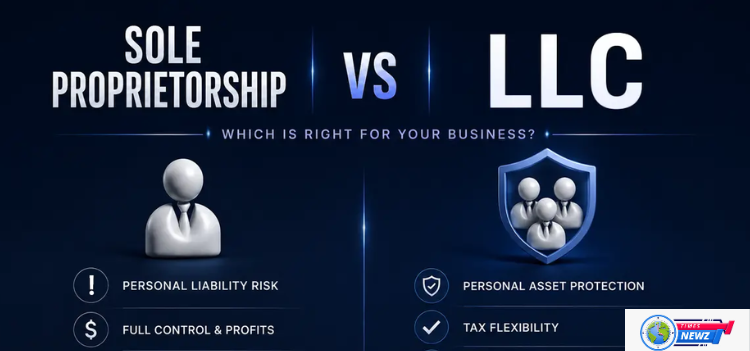
Pursuing entrepreneurship by starting a small business is less complicated than it seems. But, what exactly qualifies as a small and medium-sized business (SMB)? And it begins with a simple question: What kind of business structure fits you best? Maybe you’re a freelance graphic designer offering digital services, or an independent hair stylist. You could be running things solo, or maybe you’ve brought on an assistant, a virtual admin, or even a small team.
So, does that make you a sole proprietor, or are you operating as a single-member LLC? And, what does that mean for taxes, liability, or the legality of your business? Let’s walk through the key differences between a sole proprietorship and a limited liability company (LLC), so you can make the best choice for your SMB — and your future.
Starting a small business

For some of you, starting a business might feel like a natural next step — like turning a hobby you love into something more. Maybe you’ve been knitting scarves for family and friends every holiday and are finally ready to share your creations with the world. For others, the path may feel a little less clear. You know you want a side hustle, or you’re craving a new direction, but you’re not quite sure where to begin.
Wherever you’re starting from, choosing the right business idea will take a mix of curiosity and research. But first, let’s cover the differences of sole proprietorship and LLC
Key differences between sole proprietorships and LLCs
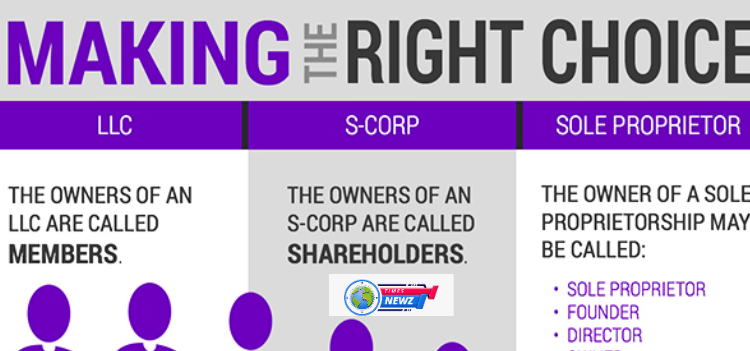
No matter how you register your business, some things stay the same. According to the U.S. Small Business Administration (SBA), a small business in the U.S. typically has fewer than 200 employees, operates for profit, and is physically located in the United States. If your business checks all those boxes, you’ll likely need to register as either a sole proprietorship or an LLC.
We’ll walk you through both — the perks, the potential pitfalls, and how to know which one matches your business goals.
While sole proprietorships and LLCs share some common ground — like handling your own marketing and crafting a strong small business proposal — they part ways in key areas. For instance, business names: LLCs are required to include “LLC” in the name, while sole proprietors often need a name that clearly reflects the type of service they offer.
There’s more to weigh — including how you’re taxed and how much flexibility you’ll have as you grow. To help you choose the best path forward, here’s what to keep in mind:
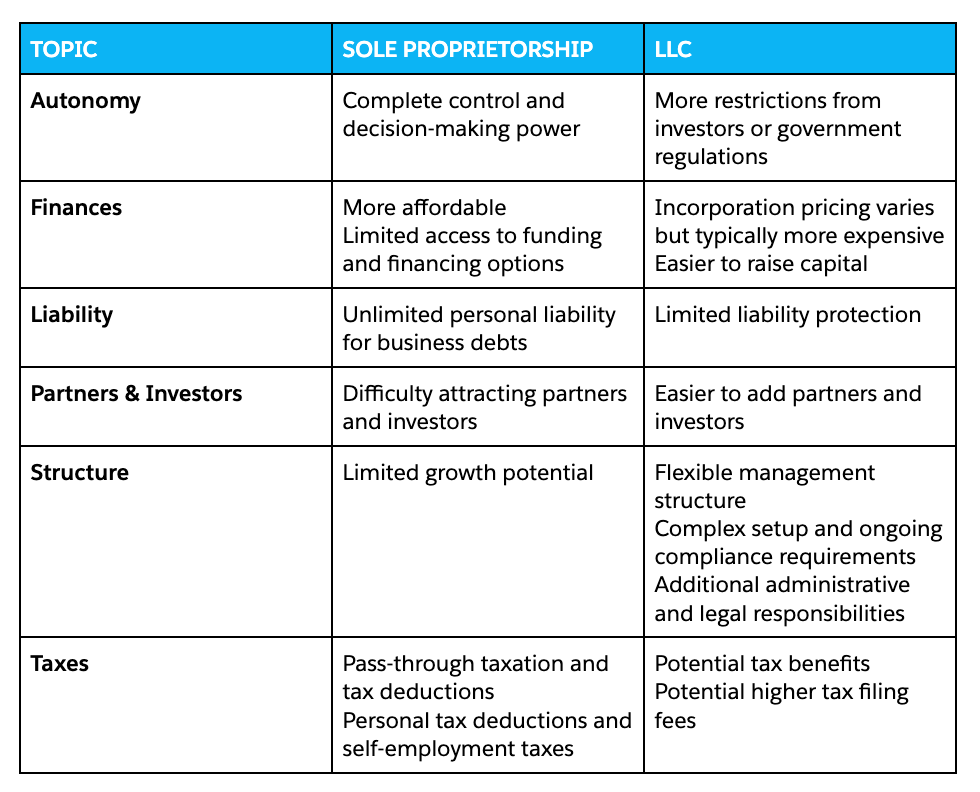
Why a sole proprietorship might be right for you
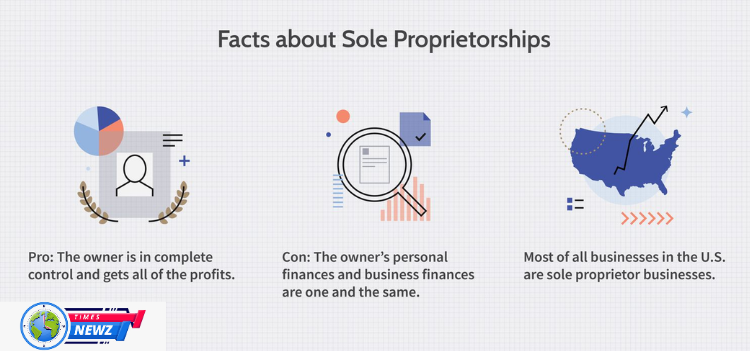
If you’re just getting started, a sole proprietorship can be one of the easiest and most affordable ways to launch your business. It’s a solid option if you’re looking for flexibility, want to move quickly, and don’t have the need (or desire) to manage more formal business structures just yet. It’s especially helpful if you’re working on your own and want to keep things simple.
You’ll have full control over your decisions, minimal paperwork to deal with, and fewer upfront costs. Taxes are straightforward too, since your business income flows directly to your personal tax return. You may even qualify for deductions like home office expenses, business travel, internet or phone bills, and equipment you use for work.
Why an LLC might be right for you
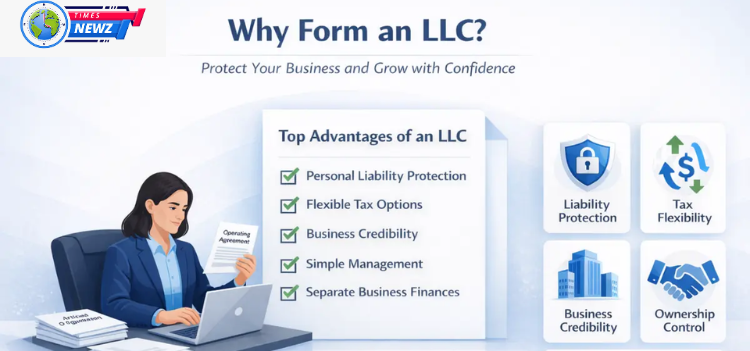
If you’re building a small business that you hope to grow and share with others, an LLC can offer you a strong foundation. Compared to a sole proprietorship, it gives you more legal protection, more flexibility in how you’re taxed, and more credibility when working with customers or potential investors.
Here’s how an LLC can support you:
- Limited liability protection: Your personal assets, like your savings, home, vehicle, and other property, are typically shielded from business-related lawsuits or debts.
- Flexible tax options: You can choose to be taxed as a sole proprietorship, partnership, S corporation, or C corporation, depending on what’s best for your situation.
- Professional credibility: An LLC gives your business a more official image, which can help you gain trust with clients, suppliers, partners, and collaborators.
- Room for collaboration and growth: It’s easier to raise capital and bring in outside investments — whether you’re growing slowly or scaling quickly.
If you’re running your business solo, you might form a single-member LLC — a structure that still offers protection, but is treated like a sole proprietorship for federal taxes. However, you can choose to be taxed differently.
For example, you might elect:
- A C corporation structure, which creates a complete legal separation between you and your business. That means your personal belongings — including real estate, savings accounts, personal investments, and retirement funds — won’t be touched in case of business debts.
- An S corporation designation, which allows profits and losses to pass directly to your personal tax return. That can help lower your tax bill, especially if your business is generating consistent revenue.
How to choose the right business structure for you

Choosing between a sole proprietorship and an LLC depends on where you see your business going, how much risk you’re willing to take on, how many resources you can manage, and how much structure you already have. There’s no one-size-fits-all answer, but the more clearly you understand your goals, the more confidently you can build something that lasts.
If you’re starting small with minimal risk and want a business structure that’s fast, low-cost, simple, and easy to manage, a sole proprietorship might be the right fit. But if you’re planning to grow, want to protect your personal assets, hope to bring in outside funding, or plan to hire a team, an LLC offers a stronger legal foundation. Here are a few ways to help you weigh the decision:
What’s the nature of your business — and how much risk does it carry?
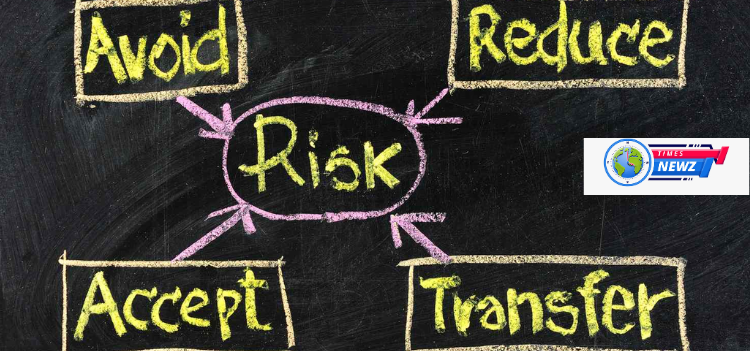
Some industries are riskier than others. If you work in healthcare, finance, construction, cybersecurity, or any service involving sensitive data or physical safety, liability protection becomes essential. A sole proprietorship offers none — which means your home, car, savings, and other personal assets could be on the line if anything goes wrong.
An LLC structure can help separate your personal and business finances, shielding you from lawsuits, business-related debt, compliance violations, or legal disputes. This separation gives you peace of mind — and more time to focus on what really matters: serving your customers and doing great work.
What are your funding goals, growth plans, and team sizes?

If you’re planning to scale — by expanding to new markets, hiring employees, opening additional locations, or seeking outside investment — an LLC may be the better choice. It allows you to bring on partners, split ownership, raise capital more easily, and establish long-term credibility.
It’s worth thinking about the day-to-day, too. Will you need a full-time assistant, a remote team, a few part-time contractors, a dedicated operations lead, or maybe all of the above? If your team includes more than just you, having the right tools to manage sales, service, marketing, and operations will help you grow with clarity and confidence.
What are your plans for taxes?
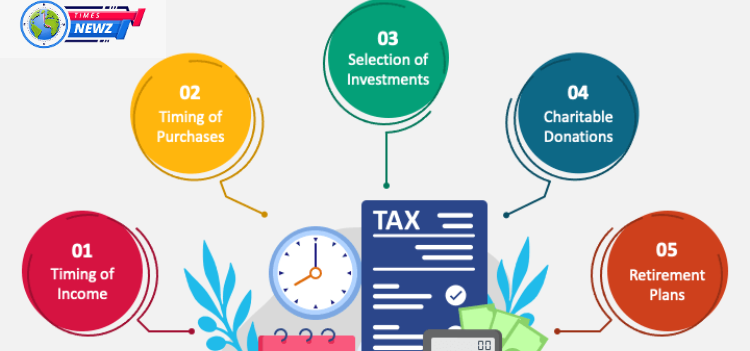
With a sole proprietorship, profits and losses pass directly to your personal tax return. It’s straightforward but may not always be the most tax-efficient option, especially as your revenue increases.
LLCs give you more control over how your business is taxed. You can choose to be taxed as a sole proprietor, a partnership, an S corp, or a C corp, depending on which option aligns best with your income level, business model, financial goals, and growth strategy.
If you’re unsure which to choose, a tax advisor can walk you through the implications — especially as your business evolves or your income structure changes (in a good way!).