


You’ve probably seen the ads. “5G — Now Available in Your Area.” Blazing fast downloads. Low latency. The future of wireless is here.
And yet, before most of America has even fully experienced 5G, the tech world is already buzzing about something bigger. Something that makes 5G look like dial-up.
We’re talking about 6G — the sixth generation of wireless technology, and the most ambitious leap in mobile communications since the internet went mobile.
Now, before you panic about needing a new phone or worry that your brand-new 5G plan is already obsolete — relax. 6G isn’t coming tomorrow. But it is coming, and 2026 is a landmark year in its development. The decisions being made right now in research labs and standards bodies around the world will define how Americans connect, communicate, and live in the 2030s and beyond.
So what exactly is 6G? How fast is it really? When will it arrive in the US? And why should you care today?
Let’s break it all down — no engineering degree required.
First: A Quick History of the “G” in Your Phone
To understand 6G, it helps to know what each generation actually meant for everyday Americans:
| Generation | Year (US) | What It Changed |
|---|---|---|
| 1G | 1980s | Voice calls — the original “brick” cell phones |
| 2G | Early 1990s | Text messages, basic data |
| 3G | Early 2000s | Mobile internet, basic apps |
| 4G LTE | 2010s | Streaming video, smartphones as we know them |
| 5G | 2019–present | Faster speeds, lower lag, early smart city tech |
| 6G | ~2030 | AI-native networks, holographic communication, seamless digital-physical world |
Each generation didn’t just make phones faster — it opened up entirely new categories of technology and behavior. 3G gave us the smartphone era. 4G gave us Uber, Netflix on the go, and Instagram. 5G is enabling self-driving car communication, smart factories, and remote surgery.
6G is expected to do something even more profound: make the digital world feel physically real.
So What Actually Is 6G?
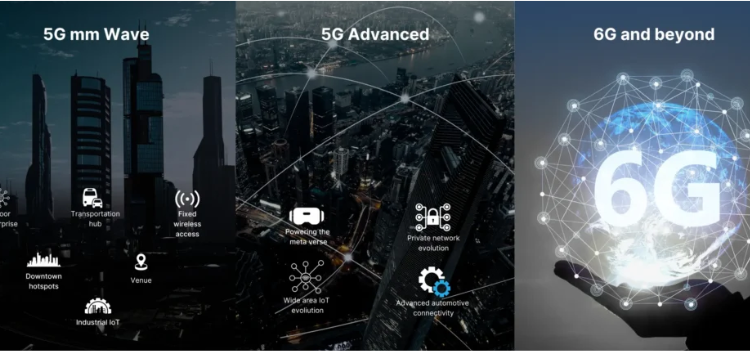
<invoke name=”web_search”> In simple terms, **6G is the sixth generation of cellular wireless technology** — the planned successor to 5G, currently in active research and early standardization worldwide.
<cite index=”60-1″>As of 2026, development of 6G is coordinated by the International Telecommunication Union (ITU-R) within its IMT-2030 framework. Companies including Ericsson, Nokia, Huawei, Samsung, LG, Apple, NTT Docomo, and others have announced 6G programs, and governments across North America, Europe, and Asia are funding national 6G initiatives.</cite>
Think of 6G not just as “faster 5G” — though it will certainly be that. It’s being designed from the ground up to integrate artificial intelligence directly into the network itself. Every antenna, every connection, every data handoff will be intelligently managed by AI in real time. The network won’t just carry your data — it will think about how to carry it.
The Key Numbers (When It Arrives)
<cite index=”65-1″>The ITU has laid out a broad vision for 6G that includes speeds up to 10 times faster than 5G, fast enough to support holographic teleconferencing.</cite> Here’s what that means in practice:
- Speed: Up to 1 terabit per second (Tbps) — enough to download an entire 4K movie in less than a second
- Latency: Under 0.1 milliseconds (5G is already fast at 1ms; 6G will be nearly instantaneous)
- Connectivity: Designed to connect not just billions of phones but trillions of devices — every sensor, machine, and IoT gadget on the planet
- Coverage: True global coverage, seamlessly blending satellite, terrestrial, and underwater networks
Where 6G Development Stands Right Now (July 2026)
Here’s the part that makes 2026 genuinely significant: this year is a turning point for 6G.
<cite index=”65-1″>2026 marks the year that discussions are shifting from “what could be possible” to “what will actually be built,” according to IEEE Member Gabrielle Silva. After years of research, pilot projects, and ambitious promises, the telecommunications industry is beginning the first phase of formal 6G standardization.</cite>
In practical terms, some major milestones just happened:
<cite index=”67-1″>At the June 2026 3GPP RAN Plenary in Singapore, the industry advanced several key areas under study and finalized the timeline for Release 21 — the first release expected to define 6G. The June RAN Plenary marked a transition point, from early study toward more concrete definition, across several areas of the 6G air interface and system design.</cite>
<cite index=”61-1″>3GPP has agreed that the first 6G specifications will be available early 2029.</cite> From there, commercial deployments are expected to begin rolling out around 2030.
Think of it this way: the blueprints are being drawn. The foundation is being poured. The building won’t open for a few years, but the address is confirmed.
The 6G Timeline: What Happens When
Here’s the realistic roadmap for 6G in the United States:
2024–2026 — Research & Early Specifications Technology requirements and performance targets are being defined. This is where we are right now. The ITU and 3GPP are agreeing on what 6G must do, and major vendors like Ericsson, Nokia, and Qualcomm are running early experiments.
2026–2028 — Standards Development The actual technical specifications are written. Companies compete to have their patents and technologies included in the global standard. This phase determines what 6G will actually look like under the hood. <cite index=”66-1″>The actual specifications will be included in Release 21 by 2028.</cite>
2028–2030 — Test Networks & Trials Pre-commercial 6G networks start appearing. <cite index=”62-1″>The United States will have an early showcase opportunity at the 2028 Los Angeles Olympics</cite>, where next-generation wireless technology is expected to be demonstrated for the first time on US soil.
2030 — First Commercial 6G <cite index=”64-1″>Ericsson is advancing concept validation to lay the foundations for initial commercial deployments around 2030.</cite> South Korea, Japan, and China are targeting limited launches by 2028–2029, while the US and Europe are expected to see broader commercial availability by 2030–2031.
2030s — Mass Adoption <cite index=”64-1″>Between 2026 and 2031 alone, total global mobile data traffic is forecast to grow by a factor of 2.4 — with a further acceleration expected in the era of 6G.</cite>
What Will 6G Actually Change for Everyday Americans?

This is the most important question. And the honest answer is: a lot — but gradually. Here are the use cases that tech researchers are most excited about:
🥽 Immersive Extended Reality (XR)
Imagine putting on lightweight glasses — not bulky VR headsets — and having a meeting with colleagues from across the country where they appear to be sitting in your living room. In full 3D. With no lag. With 6G’s combination of ultra-low latency and massive bandwidth, truly seamless augmented and virtual reality becomes possible for the first time.
🏥 Remote Surgery & Precision Healthcare
5G opened the door to remote surgery experiments. 6G will walk through it. With near-zero latency and ultra-reliable connections, a surgeon in New York will be able to perform a procedure on a patient in rural Montana in real time, using robotic instruments. The network will be fast enough that the doctor won’t be able to tell they’re not in the same room.
🚗 Fully Autonomous Transportation
Self-driving cars today rely heavily on onboard sensors and processing. 6G will enable vehicles to communicate with each other and with road infrastructure thousands of times per second. A network of autonomous cars could collectively “see” around corners, prevent accidents before they happen, and route traffic with AI-level efficiency.
🏙️ Smart Cities That Actually Work
Traffic signals that adapt in real time. Utility grids that self-optimize. Emergency services dispatched by AI before a human even calls. <cite index=”68-1″>6G will enable live digital twins of entire cities for optimization and planning, predictive maintenance across all infrastructure, and “what-if” scenario testing in perfect digital replicas.</cite>
🤖 Ambient Robotics & Automation
<cite index=”68-1″>The combination of ultra-reliable low latency communication, edge computing, and integrated sensing will allow robots to operate with unprecedented autonomy and coordination — including swarm robotics with thousands of coordinated units, fully autonomous transportation networks across air, land, and sea, and remote robotic surgery with haptic feedback.</cite>
The US vs China: The 6G Race You Should Know About

If you follow technology news, you’ve probably heard about the US-China competition in AI and semiconductors. The same geopolitical stakes apply to 6G — and they’re significant.
<cite index=”60-1″>Geopolitical competition during the rollout of 5G has continued to shape the development of 6G. China reduced participation by foreign vendors and relied more on domestic suppliers such as Huawei and ZTE. Several Western countries later restricted Huawei and ZTE after government investigations accused Chinese firms of cyber-espionage and intellectual-property theft. Analysts have suggested that such divisions could lead to a split in 6G standards.</cite>
In response, the United States has been rallying allies. <cite index=”60-1″>A joint statement issued in February 2024 by the United States, Australia, Canada, Czech Republic, Finland, France, Japan, South Korea, Sweden, and the United Kingdom endorsed shared 6G principles for open, global, and secure connectivity.</cite>
Why does this matter to you as an American? Because whoever writes the 6G standards shapes the future of global communications — the security protocols, the architecture, the rules. It’s not just a technology race. It’s an economic and national security competition.
The US government is taking it seriously. <cite index=”66-1″>The National Telecommunications and Information Administration (NTIA) supports the development of 6G for US consumers and innovators, working with the FCC and other federal agencies to advance US leadership in the development of global 6G standards.</cite>
A Dose of Reality: What 6G Won’t Do
Every new wireless generation comes with breathless hype — and 6G is no exception. So here’s the honest, grounded view from some of the engineers actually building it.
<cite index=”65-1″>Some groups are urging a more cautious approach to 6G, shaped by lessons from 5G. Telecom operators want more focus on lower costs, better efficiency, and real-world usefulness. Many of the use cases envisioned by 6G proponents already exist and may not need all the bandwidth 6G promises.</cite>
One IEEE expert put it plainly: <cite index=”65-1″>”I expect 6G to be more aligned with the requirements of operators. It will deliver efficiencies, lower operational costs, lower power consumption, and better integration with other networks.”</cite>
In other words: 6G will be transformative, but it will be a gradual transformation. Not a sudden overnight revolution. Your 5G phone won’t become worthless — just like your 4G phone didn’t become useless the day 5G launched.
The rollout will be uneven, as it always is. Urban areas will get 6G first. Rural America — already underserved by 5G — will wait longer. This is a challenge the industry and policymakers need to solve proactively, not retroactively.
What Should You Do Right Now?
Honestly? Not much — and that’s completely okay.
6G won’t be commercially available in the US until around 2030. Your current phone, whether it’s 4G or 5G, will serve you well for years to come. You don’t need to wait for 6G to buy a new device.
But here’s what you can do:
Stay informed. The decisions being made in 2026 will shape what 6G looks like for decades. Public awareness matters — especially when it comes to debates about spectrum allocation, security standards, and making sure rural Americans aren’t left behind again.
Follow the 2028 Olympics. The Los Angeles Games are shaping up to be a major showcase for next-generation wireless technology on American soil. Think of it as 6G’s coming-out party.
Watch your carrier announcements. Verizon, AT&T, and T-Mobile will begin releasing details about 6G trials and timelines in the next year or two. That’s when things get real for consumers.
Make sure you’re on 5G first. If you’re still on 4G LTE, now is a great time to upgrade. 5G coverage has improved dramatically across the US, and you’ll want to experience the foundation that 6G is being built upon.
The Bottom Line
<cite index=”68-1″>6G may represent the point at which network technology becomes truly invisible — so seamlessly integrated into our environment that we no longer consciously interact with “the network” but simply experience a world where digital and physical reality have effectively merged.</cite>
That’s a big promise. And it’s still several years away.
But 2026 is the year the blueprints become real. Standards are being written. Timelines are being confirmed. The race is underway — and the United States is in it to win it.
The next time someone hands you a phone in 2030 and says “this is 6G,” you’ll know exactly what that means, how it got there, and why it matters.
And you’ll be right at home in the future.